Showing posts with label Falmouth. Show all posts

Wednesday, 11 January 2012

RIP Barrington


On Christmas Eve a much loved member of Falmouth society died. Barrington, as he was known, was the landlord of the Seven Stars pub (Pip’s local for many a year) but was also a priest, though he wasn’t ordained until he was in his 60s.

Barrington’s famous scowl and heavy eyebrows were featured in the Beano courtesy of another Seven Stars regular, Nick Brennan, a very talented cartoonist who has worked for the Beano (amongst many others) for years.

Nick caught his stance perfectly – all of us locals have been subjected to Barrington’s Glare at times, but also, if any of us were in trouble, we could always go to Barrington for help and advice. “Come to the back bar,” he would say, and we could sit there and pour out our woes. He was also adamant about his likes and dislikes - he refused to have mobile phones in the pub and to warn customers, he spiked a phone and hung it up on the wall.

Dear Barrington was a good friend to me – and to many others, though he did have a soft spot for me. One summer evening when I hadn’t known Pip for long, Barrington confided that he'd got a new car. We went outside to look at it. “Want a spin?” he said.

I agreed, hopped in and was taken for a drive by Barrington. When we arrived back at the pub, everyone was intrigued as to where we’d gone. Except my husband, who was onto his third pint and busy talking….

Barrington’s funeral was a wonderfully grand and curiously happy affair – a Requiem Mass at Truro cathedral last Friday with at least 500 people attending plus Bishop Bill, the current Bishop and many other dignitaries. Barrington had written the service out himself and would have loved it. Everyone sang their hearts out, and the wake afterwards, held in the Seven of course, went on for hours. 7 barrels of beer were drunk and they actually ran out. Which gives you some idea of dear Barrington’s popularity.

As a friend said to me at the service, “Trust Barrington to die on Christmas Eve. He’ll know that from now on it’ll be known as Barrington’s Eve.” And so it should be.

Here’s to you, Barrington. To a good and true friend.

Saturday, 20 March 2010

A stormy Career

I was fortunate enough to meet David Barnicoat, one of Falmouth's harbour pilots, for what turned out to be a heartwarming meeting. It's wonderful to find someone who really loves what they do. In March Cornwall Today.

David Barnicoat has a refreshing attitude to his career. “I don't honestly think I've done a day's work since I left school!” he says. “It's been one fantastic hobby.” He shares this “hobby” on BBC Radio Cornwall's breakfast show on Wednesday mornings, and in his weekly column in the Falmouth Packet.

David is the only ex-Trinity House pilot still working in Falmouth. The safety of shipping, and the well being of seafarers, have been the prime concerns since Trinity House was granted a Charter by Henry VIII in 1514. In 1809 Falmouth became a Trinity House Outport, a status which it held until the de-regulation of Pilotage in 1988 when Falmouth Harbour Commissioners took over its administration.

“I'm possibly the only former Trinity House pilot working in Cornwall,” David says. “There aren't many of us left in the UK, but we remain fiercely proud of our deep-seated historic ties with Trinity House and always will.”

David was born and brought up in Falmouth. “I grew up on the harbourside and from the age of 5 I wanted to be a pilot because of my father,” he says. “He was a Tug Master and then became Assistant Dock Master, so when I was 7 or 8 I would go out with him. He taught me a lot.”

David's training involved 15 years at sea. “In order to become a Falmouth pilot you need to hold a Master Mariners Foreign Going Certificate of Competency. This involved a lot of study, gaining vital sea time and watch keeping experience. When I became a trainee pilot I had to work three months without pay learning the ropes,” he explains. “I did 4 years cadetship with the Blue Star Line of London and served with them till I came ashore, working in refrigerated cargo vessels, heavy-lift ships and container vessels.

David decided to become a pilot rather than stay at sea for several reasons. “I'd always wanted to be a pilot in my home port. Also, in the late 1970s you could see the demise of British shipping with a large number of foreign seamen being employed and I didn't want to sail with a non-British crew for the rest of my life.”

How does he manage now as a pilot, communicating with foreign crews on ships? He grins. “Most crews speak fairly good English but you can usually get through with a bit of Anglo-Saxon Merchant Navy language! I know the helm and engine orders in Russian, but we speak English all of the time.”

He is one of six pilots in Falmouth who are all self employed. “We go on 12 hour watches – from 8am-8pm or 8pm-8am but we have long rest periods which are strictly adhered to for Health & Safety reasons,” he explains. “Falmouth Harbour Office is the operational control centre for pilotage, but when a ship radios in for a pilot we can be called at home: as long as we are within one hour of the port.”

The job involves piloting ships into the bay, the harbour, into the docks, up the River Fal to Truro and to the stone quarry at Porthoustock on the Lizard Peninsula, but the work has changed over the years.

“When I first became a pilot we used to take ships to Penryn, little tankers to Coastlines Wharf, and to Dean Quarry on the Lizard,” he says. “But now there's nothing going to Penryn, Coastlines, or Dean Quarry, and the River Fal lay-up berths aren't as active as they used to be in the 1980s although there are 9 ships laid-up there now due to the recession.”

A few ships are still piloted to Truro every month, but Falmouth docks have changed. “They are geared more towards Royal Fleet Auxiliary and Ministry of Defence contracts, but they work on other vessels and we have the 24 hour bunkering operation now.”

The weather plays a vital part in a pilot's work, but David says it has to be “very bad” before they are prevented from bringing a ship into port. “It depends on the type and size of ship and where it's going: it's nothing you can quantify. A risk assessment is undertaken for each ship, which involves detailed paperwork.

“Everything now is regulated. Safety and the Environment are the two main words imprinted on a pilot's brain,” he says with a grimace. “I hate paperwork – and 'jobsworth' people with no experience who make stupid decisions.”

David has piloted many well known ships including the Royal Yacht Britannia on two occasions, but he loves a challenge. “I like the difficult jobs like the 100,000 tonners brought in and put on Duchy Wharf. It gets the adrenaline going and afterwards you have a great satisfaction.”

Shipping casualties can be exciting, such as the Egyptian factory ship Baltim, that went aground at the entrance to Helford, back in the 1980s. “It was quite rough with a heavy easterly swell and as the pilot boat came in, I leapt onto the pilot ladder to get aboard. Baltim was banging on the rocks but after about 45 minutes there was a big swell and I managed to get her off,” David says cheerfully.

Doesn't he get nervous? “When things start to go wrong you do get concerned but the worst thing you can do is panic,” David explains. “You have to look at the situation logically, make a decision, and stick by it. If you panic, everything compounds very quickly.”

The Falmouth pilots are responsible for piloting all the cruise ships in and out of the harbour. “We will have 30 this year which means about 30,000 passengers arriving in Falmouth; many go to tourist destinations around Cornwall, which is very good for the economy.” Then there is the much publicised proposed dredging of Falmouth Harbour. “The pilots are kept well briefed by the Falmouth Harbour Commissioners. We're hoping for some good news; this would be a massive boost for Falmouth and West Cornwall.”

It isn't just a love of the sea that inspires David: he has concerns for the welfare of seafarers, too. He likes to visit ships in port at Christmas with Mission to Seafarers volunteers to deliver presents to the crews. “The Mission do a marvelous job, throughout the year” he says quietly.

Thinking ahead, what has David planned for the future? “I don't want to retire (at 65) but the day is coming, so I'm trying to channel my interests elsewhere. I'm like one of my mentors, the late Peter Gilson - I'd like to continue researching local and maritime history,” he says firmly, “and leave my huge photographic collection for generations to follow.”

David is also a talented photographer, though he is too modest to admit this. He has also written a book about the shipping of the Port of Falmouth and the Pilotage service and “I'm going to write another one but I'm not sure of the subject yet!” He smiles thoughtfully. “I'd like to travel too – back to my old haunts down in Australia and New Zealand.”

David's enthusiasm shines through, and it is a joy to meet someone who loves their work as he does. “I have more passion for the job now than when I started over 30 years ago,” he says quietly. “I just love the sea and ships. It's been a great honour and immense privilege to have served as a pilot in the Port of Falmouth, a port I love with all of heart. It's my life, really.”

Thursday, 22 October 2009

Stones Bakery

I go to this bakery in Falmouth a lot. Himself buys their organic flour to make bread, and they make the best flapjack ever: full of fruit, seeds and not too sweet. Think I'll have to go down there later.... read about them here and in November's Cornwall Today.

THE IMAGINATIVE BAKERS - THAT SELL BOOKS!

Stone's Bakery in Falmouth is one of several artisan bakers emerging in Cornwall to make delicious products using high quality ingredients. Having started off two years ago from an industrial unit in Penryn and a stall on Falmouth Moor they have taken over a shop in the High Street and are selling out with their delicious baguettes, focaccia and sourdoughs, as well as speciality breads including garlic and thyme, and a spelt and honey loaf. They also sell a wide range of cakes, croissants and cheese straws and are renowned for their flapjack. And to cater for all tastes, they even sell books!

Oliver Kingdon, 29 and his wife Rosie, 28, seem a quiet, industrious couple but their faces light up when they start talking about their food. “We get our organic flour from three places – every mill produces a slightly different type of flour that suits different types of bread,” Oliver explains. “Stoates & Son are a Dorset firm that provide good wholemeal spelt and rye flour.”

“We did look into getting Cornish flour but there wasn't anyone who sold it on a large enough scale,” adds Rosie. “So we get white flour from Shipton Mill, and self-raising and plain flour for cakes from Doves. We tried them all out to see what suits which bread, and we've tried to go with smaller independent mills - they're more knowledgeable and specialised.”

“Organic flour has less pesticides, as wheat is a crop that is heavily sprayed,” Oliver continues. “The flavour from stoneground is better and they blend different types of wheat which have different levels of protein.”

“We wanted the flour to be organic because it tastes better,” says Rosie. “We're not completely organic because we wanted to keep our prices down but the flour is. And in some areas you don't necessarily taste the difference. We wanted to make our products at a price everyone could afford.”

The shop is open from Tuesday to Saturday from 9-4 but the hours are flexible. “There are always things to finish up at the back so if we're there we might as well sell things,” says Oliver. “We're happy for people to tap on the window!”

Oliver and Rosie Kingdon met at Hull university 9 years ago and have been together ever since. After leaving university, Oliver got a job at a small organic mill and bakery at Lincolnshire. “I'd always been interested in food, and I wanted to do something practical,” he explained. “I also did a Panary course which is like bakery school.”

“We liked the idea of being self employed and we both enjoy baking,” Rosie says. “It seemed something we could do on our own so we went from there.”

The couple moved to Cornwall two years ago. “We'd been here on holiday and wanted to live by the sea,” Rosie says. Initially they lived in St Ives, and named the bakery after the notorious Stones Reef off Godrevy Island. They found the industrial unit in Penryn, and set up the stall in Falmouth. “We liked Falmouth as a town,” says Oliver. “It's a year round town not just tourists, which is good for business.”

“We didn't want to take on a huge amount of risk so the stall allowed us to start off small and test the water,” explains Rosie. “If it hadn't worked, we would have done something else. In fact we built up a customer base but if it was really windy then the market would be cancelled and we couldn't trade that week. So we wanted something where we could be there 5 days a week, year round.”

This job is not for the fainthearted - Oliver starts baking between 3 and 5 in the morning, five days a week. “When we had the unit I slept in the day and never saw anyone,” he says. “I'm used to being covered in flour!” he adds with a grin. “But with the shop we get to know our customers and see more of each other.”

Rosie makes the cakes in the daytime in between serving customers. “There aren't many places where you can buy a cake which is just made out of the ingredients you'd have in the fridge,” she says. “If we have fat in the cake then it will be Trewithen butter, and eggs from Cornhill.”
“If there's chocolate then it's proper chocolate melted by us, not chocolate flavour,” adds Oliver. “We experiment a lot with the cakes but if they don't sell, we don't make them.”

The most popular items are baguettes, chocolate brownies and the longest cheese straws ever seen. “We use Trewithen butter in the croissants and cheese straws, and you can really taste the creamy flavour,” says Rosie. “They're made from a croissant base and we use Cornish cheese,” adds Oliver.

At the moment their favourite is a rye sourdough loaf. “We make it just for Saturday in an Eastern European style,” says Oliver. “It's a really moist, dark sticky loaf that looks like a little brick!”

They've found the other shop owners in the High Street very friendly. “Lots of them pop in to pick things up and the hairdresser is always recommending us to her customers!” says Rosie. “There's a strong sense of community along the High Street,” adds Oliver. “When we first started work on the building we got cards from some of the others saying welcome and lots popped in to say hi. It was really nice.”

This enterprising couple don't just sell their own baking and muesli. They also stock Kyfyth Kernow jams and chutneys, greetings cards by illustrator Beth Knowles, chopping boards and cutlery trays from Barncrest in Penryn who made the wooden shop counter. They even sell second hand books. “The books come from a friend who owns Beerwolf books on Falmouth market,” says Rosie. “They have a really good selection so we decided to stock them as well.”

Having their own business has been a steep learning curve but despite having proved such a success, they have no plans to change. “Some people expand too quickly and lose the quality of the product,” explains Oliver. “If we have an idea we can find out what people think of it immediately by having tasters on the counter.”

“We want to do something practical, not have to manage lots of people,” adds Rosie. “I enjoy serving the customers – if I make a tray of flapjack then a couple of hours later it's me that sells it – that's immediate satisfaction. Particularly when they come back and tell me how much they've enjoyed it!” She pauses. “The way the shop looks is just how we want it to look. It reflects us as individuals.”

Oliver and Rosie are conscious of needing a balance between work and their lives outside. “We've got to enjoy our work and our customers, but we also want to be able to enjoy the lovely place we live in,” says Rosie. And despite not wanting to expand, in one way they will, for Rosie is expecting a baby in December.

“I'll probably get more help in the shop and work part time at first,” says Rosie thoughtfully. “But we'll see what happens.” Oliver smiles at his wife and his eyes twinkle. “We'll just get the baby baking!” he says.


Stones Bakery
28a High Street
Falmouth TR11 2AD

07791003183
stonesbakery@hotmail.co.uk

Stones Bakery also attend St Ives Farmers Market on Thursdays

Monday, 5 January 2009

Zero Balancing - what's that?


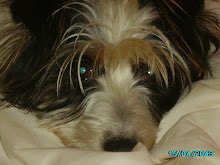
This is Molls on her best behaviour, snoring on Mum's sofa over Christmas. Butter wouldn't melt, and all that... Ignore the date in the corner!

And talking of relaxing, if anyone feels like a spot of massage with a difference, try Zero Balancing. In December's issue of Cornwall Today....

Anna Colmer, 48, moved to Cornwall in 2003 to take up a post as acupuncturist at the Lister Natural Health Centre in Falmouth, but when they heard she was a Certified Zero Balancer, they were keen for her to practise that as well.

There are few Certified Zero Balancers in Britain, but Anna is passionate about her work and loves the fact that unexpected things happen. “I like being surprised!” she says. “The more unexpected, the more enjoyable it is. I like to believe in things being magical, and this work has a magical quality to it. I think there’s a real hunger for that in a lot of people, whether they admit it or not.”
Zero Balancing uses touch to balance body energy with body structure. The work is gentle to receive but potentially powerful in effect, capable of helping a wide range of people at many different levels. Finger pressure and held stretches encourage the release of tension in the body and as a result, emotional and physical problems may be resolved and symptoms relieved. Zero balancing aims to balance a person on all levels – mind, body and soul – and coax them back to optimum health.
Zero balancing was developed in 1975 by a Californian, Dr Fritz Smith, who was an osteopath, physician and acupuncturist. “Zero balancing grew out of him trying to bring together the Western concept of wellness with the concepts of energy and healing used routinely in the East,” says Anna. “He combined osteopathy with acupuncture, where you work purely with body energy. The name arose from a recipient’s description of the session she had just received, meaning that she felt her body had been set back as nature intended.”

Anna first heard about the practice when she trained at the College of Traditional Acupuncture in Leamington Spa. “The first 3 people to train in this country all trained at Leamington and they promoted it,” she says. “A person can only become a Certified Zero Balancer if they have another therapeutic qualification. 3 years after I qualified as an acupuncturist I had a buzz to learn something new. A friend had just done her first workshop and was looking for bodies to practise on so that was my first session and I signed up for a workshop.”

Anna attended various workshops and followed a programme of learning overseen by a mentor. “Unlike most training, zero balancing training is very flexible so you can work at your own pace,” she says, and explains what a Certified Zero Balancer entails. “This is a recognition by the Zero Balancing Association that my work is of a high enough standard to be accepted by that community.

“People come to me for varied reasons,” she says. “Many come for overall wellbeing and to maintain themselves, but zero balancing can help reduce stress and tension, migraine, jetlag, relieve body pain, whiplash, improve flexibility and posture problems, help with emotional problems, difficult life transitions and work overload. We work with the whole person and see what unfolds.”

For those who don’t want to undress, or talk about their problems, zero balancing is ideal. A short health history is taken before a session, which is a hands-on bodywork that is done with the client fully clothed and lying on their back.

“Zero balancing promotes a deep sense of relaxation and it is common for people to feel revitalised and rested afterwards,” Anna says. “People may move into a new state of awareness from which old patterns and habits in the body and mind may be more readily released. This can free things up mentally so that people can find they have greater clarity of thought or make decisions more easily.”

It is up to the individual to decide how many sessions to have, but 3 or 4 are recommended as it has a cumulative benefit. Some people enjoy it regularly whereas others find it helpful when they need a support or pick-me-up.”

Sessions cost £35 and last for about 45 minutes, and Anna has her own insurance through the British Acupuncture Council. She has been practising zero balancing for ten years and is a qualified teacher of zero balancing, having done a two year teacher training programme.

“Zero balancing has transformed my life experience in so many ways and being able to offer that potential to other people feels very rich,” Anna says. “It’s good not to have to categorise people; you simply work with them as they are. It’s very freeing. We’re not imposing change, we’re simply creating the potential for it.” In this way, control is given to the client. “They decide, albeit on a subconscious level, what is going to change and how much.”

For Anna, this adds to the interest, “You never know how a session is going to go, so it’s an exploration for client and practitioner. Some people experience big changes almost immediately whereas others say they’re not sure if they feel different but may do so later. We may have initiated something, like ripples spread out over a long time.”

Anna would like to see a greater awareness of zero balancing. “I’d like to see people routinely referred by the Health Service after accidents or injuries, or post traumatic stress disorder. Injuries, shock, abuse and unresolved emotional issues can all create blocks to the free flow of energy through the body,” Anna says. “After 9/11, one of my colleagues organised a team of local zero balancers to go to Ground Zero and give sessions to the emergency services personnel working there, to help deal with the stress and trauma of what they were having to deal with.” She also has colleagues who have worked with Victims of Torture, political refugees, and sexually abused women with tremendous results. “After zero balancing, people are able to feel healed and move on with their lives,” she says. “There is also great potential to take it into the prison environment.”

Anna would also like to take zero balancing into the workplace. “There are a lot of people who might benefit but wouldn’t take themselves to a clinic. I would like to offer samples and tasters of techniques as a way of reaching more people.” Anna has also worked with pregnant women, both before and after birth, with excellent results, and is interested in teaching the skills and principles which inform Zero Balancing to non-bodyworkers.

Anna is a firm convert to Cornwall and has had a warm welcome. “People are very tolerant of other people’s differences here,” she says. “It’s very much live and let live. You don’t have to fit in a particular way, there’s quite an acceptance.” She looks out at the pouring rain and smiles. “I like the changeability of the weather and there are so many varieties of landscape within a short distance. The north coast isn’t far away but there is such a contrast to the coast here. There’s something quite unique about Cornwall.”


For further information and workshops, contact Anna Colmer on 01326 210931 or anna@zerobalancer.co.uk

Or Lister Natural Health Practice
30-31 Church Street, Falmouth TR11 3EQ 01326 210202